Residential rodent exclusion addresses the biological reality that rodents access domestic envelopes through minute structural vulnerabilities. A mature roof rat requires an opening of only 0.5 inches to enter an…
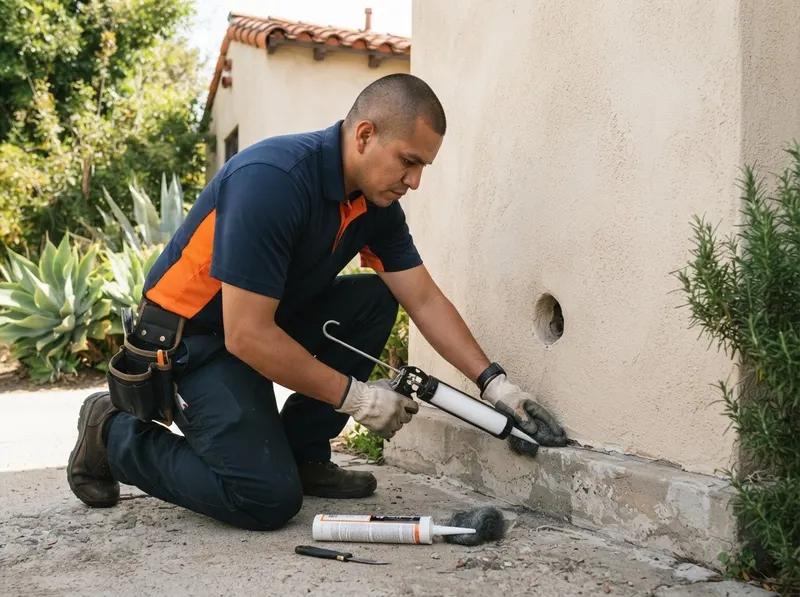
Residential rodent exclusion addresses the biological reality that rodents access domestic envelopes through minute structural vulnerabilities. A mature roof rat requires an opening of only 0.5 inches to enter an attic, while a juvenile house mouse breaches gaps as small as 0.25 inches. Generic pesticide broadcasting fails to address these physical entryways, allowing persistent reinfestation from surrounding urban corridors. DiamondEdge Pest Defense executes physical mitigation across foundational crawlspaces, weep screeds, utility penetrations, and roof transitions. In Los Angeles County, residential architecture presents hyper-localized vulnerability profiles. Craftsman foundations in Silver Lake, Spanish-tile rooflines in Los Feliz, and mid-century subfloors in Sherman Oaks require differentiated fortification hardware. Palm rats navigate overhead utility lines directly onto composite shingle and clay-tile roofs in Encino and Brentwood, necessitating heavy-gauge mortar flashing and ridge-cap closures compliant with standard building codes outlined by the Los Angeles Department of Building and Safety.
Technicians conduct a systematic 360-degree perimeter assessment before installing exclusion hardware. We prioritize mechanical barriers over transient repellents, referencing integrated pest management standards maintained by the US Environmental Protection Agency and structural vector directives from the Centers for Disease Control and Prevention. Foundations along coastal moisture zones in Venice and San Pedro often show masonry deterioration around plumbing penetrations. Sealing these breaches requires non-corrosive, rust-inhibiting materials. Our team packs penetrations with pure copper mesh, backs them with expanding high-density polyurethane foams, and covers them with 0.25-inch 16-gauge hot-dipped galvanized hardware cloth conforming to material durability specifications from ASTM International. This multi-layered barrier withstands rodent gnawing pressures exceeding 24,000 kilopascals, preventing pest access into crawlspaces and wall cavities.
Attic remediation and exterior mitigation proceed in tandem to prevent trapping established colonies inside living quarters. Dense urban neighborhoods such as Koreatown, Echo Park, and Boyle Heights feature zero-lot-line residential structures where rodent pressure from adjacent alleyways is constant. In these conditions, technicians seal exterior foundation vents with heavy-duty galvanized stamped louvers, close off soffit board gaps, and secure fascia boards. According to wildlife biology guidelines published by the California Department of Fish and Wildlife, excluding commensal rodents protects local biodiversity by reducing reliance on chemical rodenticides that pose secondary poisoning risks to predatory raptors and domestic animals. Interior traps remain deployed across transit tracks for a minimum of 10 to 14 days following physical exterior sealing. This quarantine phase verifies that zero breeding pairs remain isolated within building voids.
Structural exclusion work follows occupational safety protocols certified under the California Division of Occupational Safety and Health and pesticide safety practices monitored by the California Department of Pesticide Regulation. When crawlspaces or attic insulation exhibit heavy biological fouling from urine and feces, technicians coordinate localized cleanouts adhering to air quality standards managed by the South Coast Air Quality Management District. DiamondEdge Pest Defense guarantees that every barrier is secured mechanically using exterior-grade masonry screws, heavy steel staples, or commercial adhesive anchors. This rigorous architectural approach ensures physical defense integrity against natural weathering, wood rot, and urban rodent pressure across the Los Angeles basin.
Every job gets a firm, written price after a free on-site visit.
For standards, safe disposal, and service guidance on pest control services in Los Angeles, CA, useful references include U.S. EPA, ENERGY STAR, U.S. Dept. of Energy, Consumer.gov, U.S. Census Bureau, and Google Maps. General consumer and small-business resources are available from USA.gov, Better Business Bureau, FTC Consumer Advice, U.S. Small Business Administration, and Ready.gov.
Tell us about your residential rodent exclusion job in Los Angeles and we'll send a clear, written quote, usually the same day.
 DiamondEdge Pest Defense