Securing durable pest control services in Los Angeles requires engineered perimeter defense rather than temporary chemical fogging. Across Mediterranean urban microclimates, DiamondEdge Pest Defense installs heavy-gauge physical barriers, performs targeted biological remediations, and seals structural breaches so property managers and homeowners near me halt continuous pest migration routes permanently.
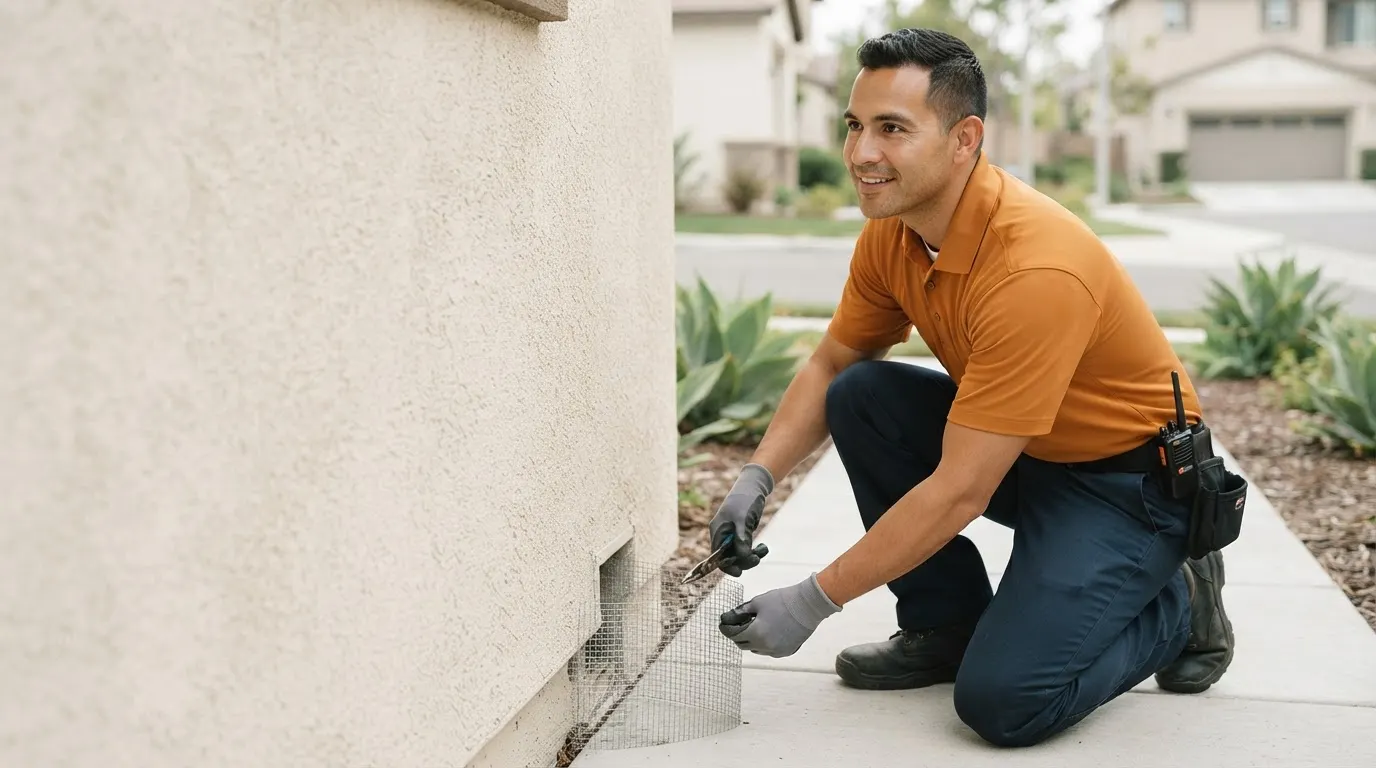
A pest control services company in Los Angeles is an operational team that inspects, isolates, treats, and mechanically seals residential and commercial structures against invasive rodent, insect, and wood-destroying organism infestations across Los Angeles County.
Every service reflects the same meticulous attention to detail, whether it's a single job or a larger pest control services project across Los Angeles.
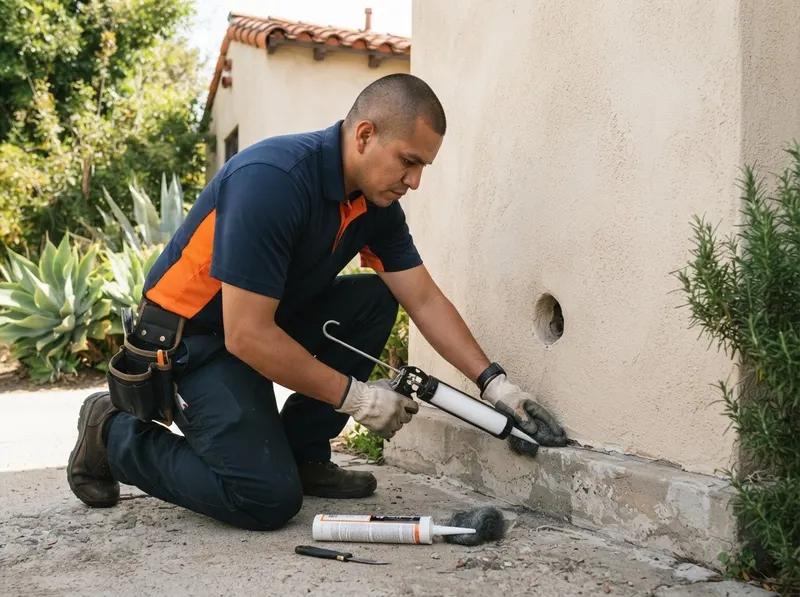
Mechanical sealing of foundation weep holes, plumbing chases, utility conduits, and crawlspace foundation vents using 16-gauge 1/4-inch galvanized hardware cloth, copper wire mesh packing, and metal-reinforced polyurethanes to permanently block roof rats (Rattus rattus) and house mice (Mus musculus). DiamondEdge Pest Defense technicians systematically inspect every architectural elevation from ground-level stem walls to secondary roof transitions, sealing structural apertures larger than 1/4 inch according to rigorous structural protection principles aligned with the Centers for Disease Control and Prevention Rodent Exclusion Standards . Every exterior penetration around gas lines, electrical panels, HVAC refrigeration lines, and irrigation controls receives custom-cut metal flashing or high-adhesion elastomeric mortars that resist gnawing and thermal expansion, preventing rodents from entering hidden wall cavities and ceiling tracks.
Get a quote →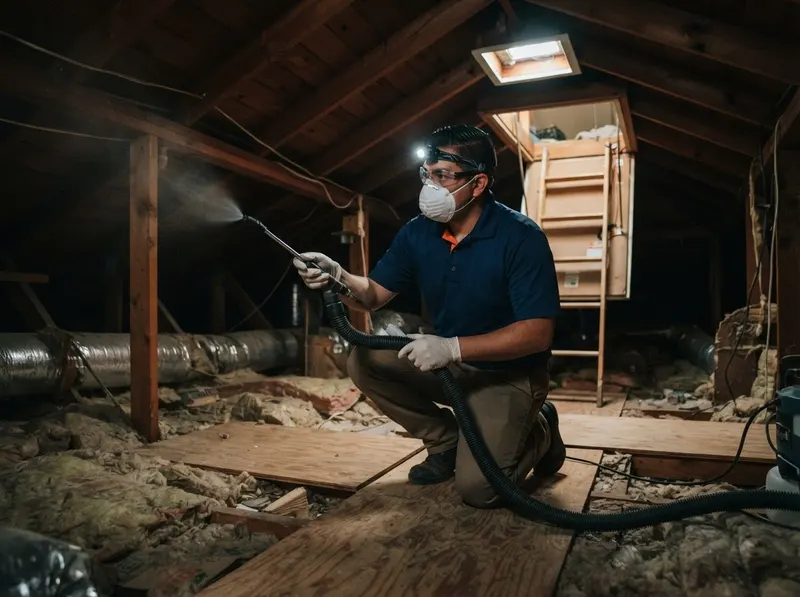
Total HEPA-filtered negative-pressure vacuum extraction of rodent-contaminated fiberglass or loose cellulose insulation, animal feces, nesting detritus, and desiccated biological remains. DiamondEdge Pest Defense restores compromised attic cavities through high-output mechanical vacuums that discharge directly into external containment units, preventing the escape of hazardous airborne dust, hantavirus spores, and allergens into the living envelope, in accordance with the strict airborne containment protocols specified by the Occupational Safety and Health Administration . After clearing all contaminated materials, crews apply a non-toxic multi-surface enzymatic sanitization treatment to neutralize rodent urine pheromone trails that attract future foragers, followed by the pneumatic installation of high-density, borate-treated cellulose insulation that delivers an optimized thermal R-38 rating while naturally deterring structural insects.
Get a quote →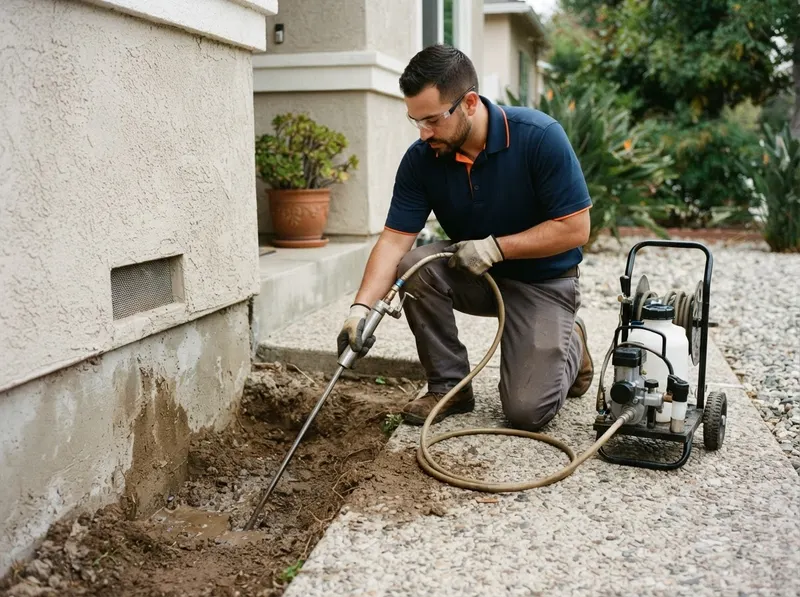
Precision perimeter trenching, continuous sub-slab concrete coring, and high-pressure non-repellent termiticide barrier injections directly into foundation soil matrices to intercept subterranean worker colonies (Reticulitermes hesperus). Technicians establish a continuous protective chemical envelope around every linear foot of the foundation perimeter, treating excavated trenches with liquid fipronil formulations calibrated to bond directly with localized clay and sandy-loam soils. Where concrete driveways, flagstone walkways, or structural slabs abutt exterior mudsills, crews core 1/2-inch vertical pilot holes spaced precisely 12 inches apart to deliver pressurized liquid barriers down to the underlying soil level, sealing each core with structural hydraulic cement matching the existing surface texture, adhering to the structural termite management guidelines defined by the University of California Statewide Integrated Pest Management Program .
Get a quote →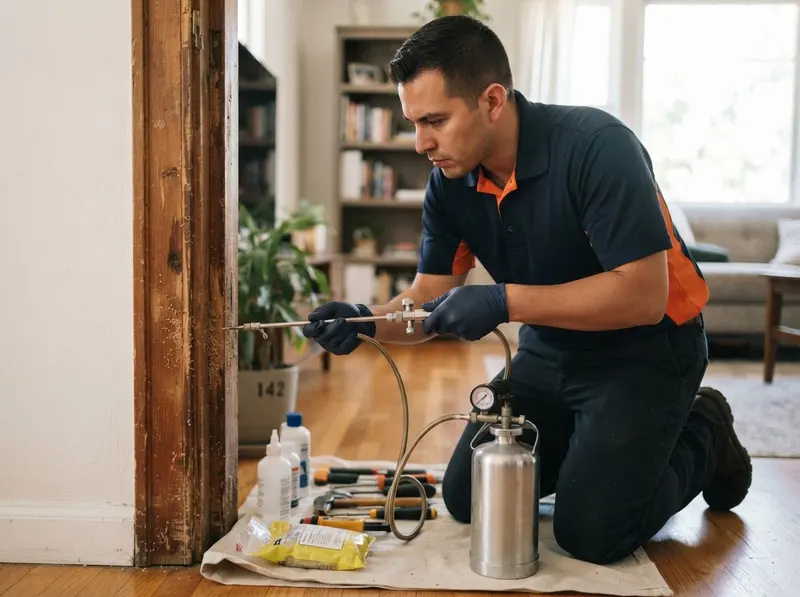
Targeted direct-injection timber applications utilizing pressurized disodium octaborate tetrahydrate solutions and non-repellent insecticidal aerosols injected directly into confirmed structural gallery voids, preventing widespread colony expansion. Technicians inspect exposed structural rafters, window jambs, exposed framing, and eaves using precision moisture meters and high-frequency acoustic detectors to pinpoint localized drywood termite (Incisitermes minor) nests without unnecessary invasive demolition. Technicians drill minimal 1/8-inch access channels directly into structural timber galleries, injecting pressurized borate salts that penetrate deep into the cellular wood matrix to eradicate feeding nymphs, soldiers, and secondary reproductives while immunizing the timber against future colonization, following best practices documented by the International Association of Certified Home Inspectors .
Get a quote →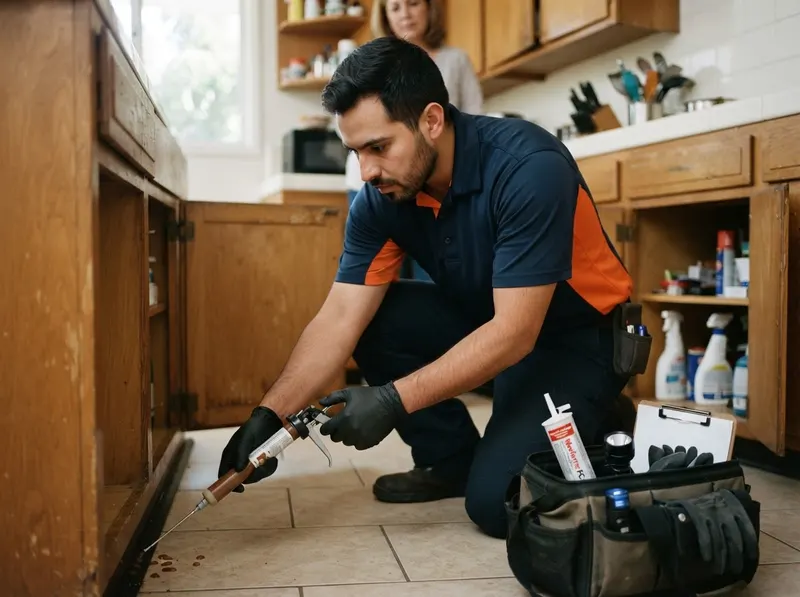
Systematic micro-crack and crevice injection, insect growth regulator (IGR) dispersion, and bait matrix rotations inside interior moisture zones to disrupt reproductive cycles without toxic broadcast chemical residues. DiamondEdge Pest Defense targets hidden infestation reservoirs behind commercial dishwashers, motor housings, refrigerator heat exchangers, kitchen wall cavities, and hollow cabinet bases. Technicians deploy targeted gel baits featuring diverse active ingredients such as indoxacarb, dinotefuran, and clothianidin to prevent physiological bait aversion, pairing these baits with juvenile hormone mimics that arrest nymphal molting cycles. This protocol complies with strict food-contact area safety guidelines established by the United States Environmental Protection Agency , achieving full structural colony elimination within 14 to 28 days.
Get a quote →
Specialized microbial drain flushing, hard-surface degreasing, and perimeter void defense engineered for commercial foodservice spaces, adhering to strict California health codes and municipal grease trap regulations. Our technicians apply proprietary microbial consortia directly into floor sinks, trench drains, and grease waste lines, where active bacterial agents consume accumulated organic fats, oils, and grease (FOG) that serve as primary breeding media for drain flies (Psychodidae) and American cockroaches (Periplaneta americana). Technicians then clean and mechanically seal sub-counter voids, stainless steel junction seams, and wall floor junctions using high-grade antimicrobial silicone caulking, fulfilling commercial food defense standards established by the National Sanitation Foundation .
Get a quote →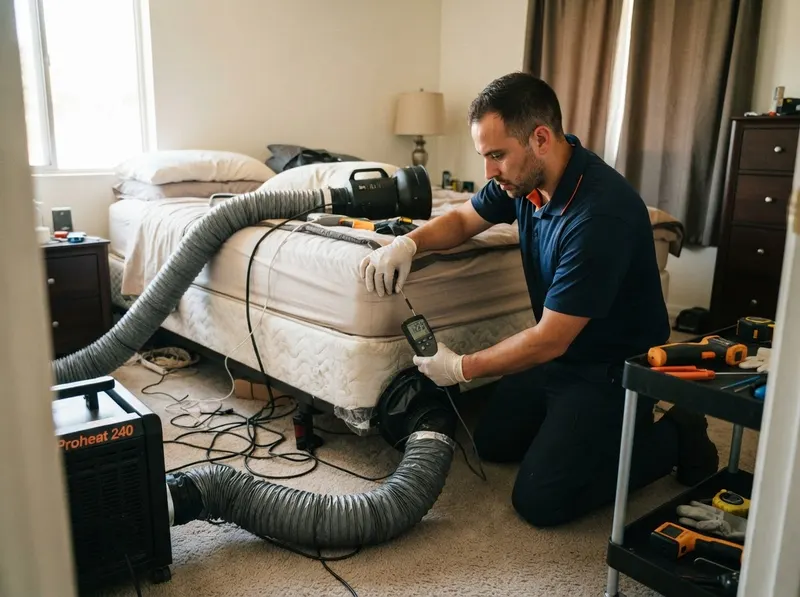
Whole-unit structural heat treatments elevating ambient chamber temperatures to a sustained 135°F, penetrating deep into mattresses, wall cavities, subflooring, and textiles to neutralize bed bugs (Cimex lectularius) and viable eggs in a single operational cycle. DiamondEdge Pest Defense utilizes industrial high-output electric and indirect fired glycol heaters paired with industrial high-volume directional air movers to ensure even heat saturation across every structural square foot. Technicians continuously track structural thermal sensors placed in hidden recesses, mattress seams, and structural baseboard voids, maintaining lethal temperatures for a minimum of 4 uninterrupted hours to destroy all life stages without leaving harmful chemical deposits, meeting technical operational parameters from the Pest Control Technology Technical Resource Network .
Get a quote →
Exterior structural perimeter micro-spraying and non-repellent foraging bait deployments along property borders to eradicate massive multi-queen supercolonies (Linepithema humile) before indoor breach events. Because Argentine ants operate in cooperative mega-colonies containing millions of individuals across hundreds of satellite queens, standard repellent pyrethroid sprays simply cause colony budding, exacerbating indoor infestations. DiamondEdge Pest Defense deploys non-repellent transfer-toxicant liquid barriers and sweet borate bait arrays along exterior vegetation margins, hardscape seams, and foundation perimeters, allowing foragers to transport low-dose lethal active ingredients back to subterranean nesting chambers to systematically eliminate the reproductive queens, fully aligned with the invasive species management protocols of the National Wildlife Federation .
Get a quote →You get a firm, itemized quote for your pest control services before any work begins, no surprises, no pressure.
Careful prep, tidy work, and a full cleanup when we are done. We treat your home and belongings like our own.
The same trusted, background-checked team from the first call to the final check.
Selecting an appropriate structural remediation strategy depends directly on foundation engineering, localized pest pressure, building materials, and the microclimate conditions surrounding your parcel. For active rodent incursions within attic crawlspaces, raised foundations, or multi-family subfloors, mechanical exclusion combined with full sanitization stops reinvasion routes permanently; standard chemical broadcast spraying simply suppresses visible foragers while leaving structural entry points open. If subterranean termites threaten crawlspace framing or perimeter mudsills, localized pressurized borate timber treatments or non-repellent liquid soil barriers provide targeted chemical defense without the operational disruption, tenant displacement, or utility disconnects required by full-structure sulfuryl fluoride structural tenting.
For drywood termites distributed thoroughly through concealed structural rafters and inaccessible shear walls, whole-building containment becomes necessary when active colonies exceed isolated framing bays. The mechanical trade-off centers on upfront capital allocation: structural hardware installations and thorough biological sanitization carry higher initial labor investments than recurring liquid applications, yet mechanical exclusion permanently eliminates the biological conditions, harborages, and thermal gaps that invite recurring infestations. In commercial kitchen facilities and dense food-handling operations, relying solely on synthetic pyrethroid sprays risks pesticide resistance and severe contamination warnings under municipal health guidelines; instead, systematic insect growth regulators, localized microbial drain cleansers, and precision bait rotations provide steady control without airborne residues settling on prep surfaces.
Homeowners managing expansive estate parcels in steep hillside canyons must weigh the costs of continuous exterior bait perimeter networks against complete envelope hardening. While perimeter baiting suppresses broader ambient population densities in natural brush lines, mechanical building hardening ensures that even during seasonal outdoor surges, pests cannot penetrate internal wall voids, crawlspaces, or living areas. Property managers dealing with multi-tenant residential structures must address shared utility chases and inter-floor pipe penetrations collectively; isolating a single unit without mechanically sealing the vertical pipe infrastructure invariably causes displaced populations of German cockroaches or house mice to migrate laterally into adjacent units through unsealed firewalls and baseboards.
Long-term property conservation requires prioritizing permanent architectural barriers first, addressing active biological hazards through direct extraction second, and reserving ongoing micro-barrier perimeter applications for maintenance zones along exterior perimeter perimeters.
Every project gets a firm, written price after a free on-site visit. Ranges below for orientation.
Tell us about your pest control services job and we'll send a clear, written quote, usually the same day. Or just call and talk to a real Los Angeles pro.
(424) 540-2748
Los Angeles features extreme microclimate diversity, ranging from dense marine coastal humidity in Venice and San Pedro to severe seasonal canyon heat and arid microclimates across Sherman Oaks and Encino, each driving distinct pest migration cycles. Unreinforced masonry structures throughout Boyle Heights, historic 1920s Craftsman bungalows across Los Feliz, and mid-century hillside cantilevered foundations in Silver Lake present extensive structural expansion joints, unshielded subfloor crawlspace vents, and degraded redwood sill plates that grant pests uninhibited access to wall voids. Subterranean moisture corridors, especially along the concrete flood control infrastructure of the Los Angeles River Greenway Trail, channel massive populations of invasive Argentine ant supercolonies and subterranean termites directly into adjacent residential sub-slabs during winter and spring rain events, while dense native scrub oak and eucalyptus stands bordering Elysian Park, Griffith Observatory, and the Sepulveda Basin Recreation Area accelerate seasonal roof rat surges directly into adjacent residential eaves and tile roof cavities. When seasonal Santa Ana wind patterns blow dry, high-velocity desert air across the San Fernando Valley and Los Angeles basin from September through November, ambient moisture vaporizes rapidly, forcing outdoor rodent and insect populations to seek interior plumbing voids, water heater drip pans, and air conditioning condensation lines inside residential living spaces. In coastal pockets like Venice and San Pedro, elevated marine air humidity creates optimal biological environments for wood-boring beetles and drywood termites, whose reproductive flights surge during late-summer heat humps. Older multifamily properties in Koreatown and Echo Park frequently share unsealed utility channels and common boiler infrastructures dating back nearly a century, facilitating rapid lateral movement of German cockroaches and bed bugs between adjacent apartment units unless sealed at every vertical junction pipe sleeve. Addressing these complex environmental factors requires deep familiarity with local Los Angeles County building codes and the regional soil variations between the heavy clay of the San Fernando Valley floor and the loose alluvial soils of coastal floodplains. DiamondEdge Pest Defense approaches these localized environmental challenges not with standardized generic chemical applications, but with targeted engineering solutions tailored directly to the specific microclimate, architectural era, and biological pressures unique to each Los Angeles neighborhood.
Free estimates for Los Angeles & the surrounding area.
For standards, safe disposal, and service guidance on pest control services in Los Angeles, CA, useful references include U.S. EPA, ENERGY STAR, U.S. Dept. of Energy, Consumer.gov, U.S. Census Bureau, and Google Maps. General consumer and small-business resources are available from USA.gov, Better Business Bureau, FTC Consumer Advice, U.S. Small Business Administration, and Ready.gov.
 DiamondEdge Pest Defense